WW1 Articles
Battles of the Western Front 1914-1918
|
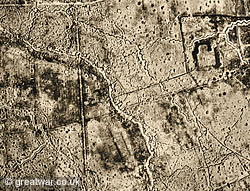
An overview of the major battles which took place in Belgium and France from August 1914 to the 11 November Armistice of 1918. The outcome of the battles in the autumn of 1914 resulted in the formation of a battle front from the Belgian coast to the Swiss border. Three subsequent years of attrition warfare took place during 1915, 1916 and 1917, with only a few months of mobile warfare at the start and at the end of four years of fighting.
Battles of the Western Front 1914-1918
Battle Remains on the Western Front
|
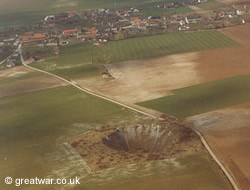
An article describing the types of battle remains to be found on the Western Front. This includes craters, bunkers, shell holes, trenches and the assorted ammunition still being dug up by farmers as they plough the fields or construction workers digging foundations.
Battle Remains on the Western FrontTrace a WW1 British Soldier
|
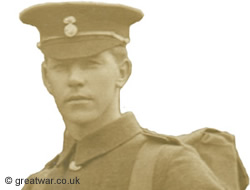
Advice to get you started if you are looking for a British soldier who served in the First World War.
War Graves on the 1914-1918 Western Front
|
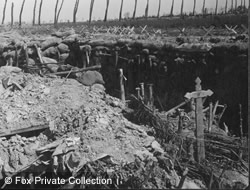
From the early weeks of the fighting on the Western Front the number of war dead was already rising into the tens of thousands. This text gives the background to the burial of military dead in individual marked graves from the 1914-1918 war and why, ironically, so many of the casualties are still recorded as “Missing”.
War Graves on the Western Front
German Military Burials in Belgium
|
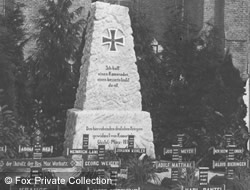
By the end of 1918 there were thousands of German soldiers buried in 678 districts of Belgium. This article explains why they were exhumed and reinterred in collecting cemeteries so that the German war dead of 1914-1918 could be cared for on Belgian soil.
German Military Burials in Belgium
The Poppy, Remembrance & Welfare Fund Raising

|
During and after the war the poppy and its connection with the memory of those who died in that war was expanded to help the military and civilian survivors of that war. Two inspirational and dedicated women, French lecturer Anna A Guérin and American teacher Moina Michael, campaigned over many years with their supporters for this symbolic red flower to be a means for raising funds for those suffering as a result of the war, most especially returning Servicemen and women, orphaned children and those who were displaced in the devastated regions.
The Poppy, Remembrance & Welfare Fund Raising
Visiting the Western Front Battlefields
|
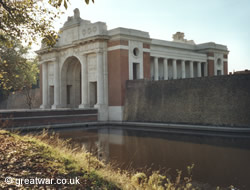
Your reason for wanting to visit the battlefields may be to visit the grave or memorial of a relative. You may wish to attend a special ceremony commemorating an anniversary or battle action. It may be to learn more about the people who lived through the experience of this most devastating war. This article offers advice and suggestions for travel with an organized tour or as an independent traveller. Our links point to information within our website and other useful external links. We hope it will be especially helpful for visitors wanting to make a trip to the battlefields for the first time.