A Soldier’s Cemetery
by John William Streets (killed and missing in action on 1 July 1916 aged 31)
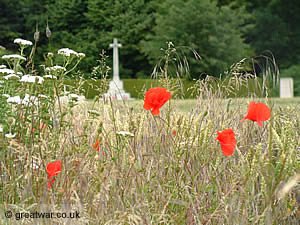
|
Behind that long and lonely trenched line
To which men come and go, where brave men die,
There is a yet unmarked and unknown shrine,
A broken plot, a soldier’s cemetery.
There lie the flower of youth, the men who scorn’d
To live (so died) when languished Liberty:
Across their graves flowerless and unadorned
Still scream the shells of each artillery.
When war shall cease this lonely unknown spot
Of many a pilgrimage will be the end,
And flowers will shine in this now barren plot
And fame upon it through the years descend:
But many a heart upon each simple cross
Will hang the grief, the memory of its loss.
Inspiration for the Poem “A Soldier's Cemetery”
|
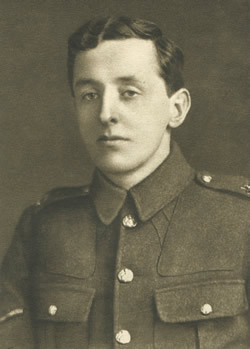
John William Streets, known as ‘Will’, wrote about the inspiration for his poems in a letter to the poetry publisher, Galloway Kyle:
“They were inspired while I was in the trenches, where I have been so busy I have had little time to polish them. I have tried to picture some thoughts that pass through a man’s brain when he dies. I may not see the end of the poems, but I hope to live to do so. We soldiers have our views of life to express, though the boom of death is in our ears. We try to convey something of what we feel in this great conflict to those who think of us, and sometimes, alas! Mourn our loss.”
Unfortunately, Will's desire to live to see his poems published was never fulfilled.
On 1 July 1916 Sergeant John William Streets moved with the 12th Battalion York & Lancaster Regiment into the assembly trenches behind John Copse on the Somme battlefield. The attack was launched at 07.30 hours. Will's battalion went in on the second wave. Will was wounded and made his way back to the British line to get his wound seen to. He was seen going to help another wounded man but he subsequently disappeared.
Will’s body was missing for 10 months before it was identified; it was found in the area of No-Mans Land. On 1 May 1917 he was officially listed as “Killed”.
John William Streets is buried at Euston Road Cemetery, Colincamps. Reference: Special Memorial A. 6.
For the listing and location of Euston Road Cemetery go to:
Cemeteries of the Somme BattlefieldsRelated Topics
John William Streets
To find out more about John William Streets go to:
John William StreetsSheffield Memorial Park, Somme Battlefield
The battlefield location where John William Streets and so many of his comrades died on 1 July 1916 is commemorated by a memorial park to the Pals Battalions of 31st Division:
Sheffield Memorial Park