Visiting the WW1 Western Front Battlefields
- Visit a WW1 Grave or Memorial
- Attend a Ceremony or Anniversary Event
- Tours of the Battlefields
- Where to Stay near the Battlefields
- Tourist Information
- Battlefield Remains
- Western Front Battlefields by Region
|
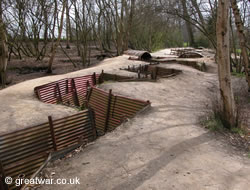
The 1WW battlefields of the Western Front are located in a long line of approximately 450 miles from the Belgian coast, through the southern Belgian province of West Flanders and regions of northern and eastern France.
Throughout the areas where the major battles were fought there are numerous 1914-1918 battle memorials, museums, military cemeteries and battlefield remains. Many of these are public sites and, therefore, usually accessible to visitors at all times. Depending on the location of a memorial site or cemetery, there may occasionally be difficulty in access for vehicles or wheelchairs where there is a narrow path or farm track. Some privately managed museums or battlefield sites have restricted opening hours and may charge an entrance fee.
Some battlefield areas are frequently visited by pilgrims and tourists, such as the Ypres Salient in Belgium, and the Somme and Verdun battlefields in France. These areas are well-served with information for battlefield visitors from the local Tourist Offices. There are public museums, overnight accommodation to suit all budgets, restaurants and signposted battlefield routes.
Visit a WW1 Grave or Memorial
|
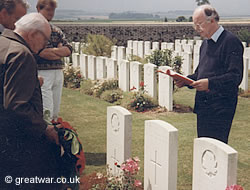
An interest for many people wanting to visit the battlefields is the discovery of a relative who fought on the Western Front. In many cases tracing the war service of a relative leads to the knowledge that that the person was killed in action or died of wounds.
Following in the footsteps of a serviceman or woman in the First World War is a fascinating way to explore the battlefields and can be a deeply moving experience. Nowadays there are records available online to find the name of an idividual and where he or she is buried. Once you have found out the location of a grave or name inscribed on a memorial you can then make plans to visit.
If you want to join an organized battlefield tour be sure to check before you book and travel with the tour that you can be taken to the location of the grave. Most tours will be able to arrange a visit to a cemetery or memorial within a reasonable distance of the tour itinerary. However, if the place you want to visit is remote or inaccessible for a coach it may be necessary for the tour organizer to help you make arrangements to make the visit by taxi or other means. Either way, it is essential that you discuss any special requirements with the tour organizer in advance of your trip.
Find a War Grave
|
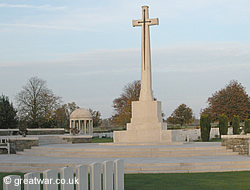
To find out the names of the national war grave agencies responsible for the care and maintenance of First World War military graves see our list of these organizations. The relevant agency will be able to offer help or in most cases there is now an online register available to search for an individual. See our page at:
National organizations caring for War Graves and Memorials
If you would like to find out more about tracing the grave or memorial of a person serving with the British and Commonwealth Forces during the First World War you can see our page about the records held by the Commonwealth War Graves Commission:
British & Commonwealth War Dead: Commonwealth War Graves Commission
Tracing British World War 1 Family History
To help get you started on what records are available to trace British ancestors who served in the military in the First World War have a look at our page:
Tracing World War 1 Family History
Attend a Ceremony or Anniversary Event
|
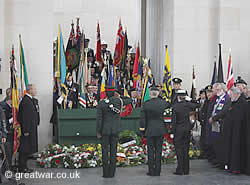
Each year there are ceremonies held on the battlefields, for example, a daily act of Remembrance, a ceremony to commemorate a particular battle action, the dedication of a new memorial, an annual anniversary event or the reburial of the discovered remains of a First World War casualty. Often a local museum will also have a themed exhibition to coincide with a special anniversary. Depending on the event the numbers attending will vary from just a few people to crowds of hundreds of people.
For events and ceremonies see our pages at:
French Flanders & Artois Events
Tours & Travel on the Battlefields
|
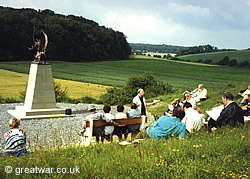
Visitors to the Western Front battlefields of the Great War began arriving in Flanders and France not long after the guns fell silent in November 1918. Those who could afford it made the difficult and costly journey to see where their sons, brothers, fathers and friends had fallen. Ex-Servicemen returned to see the places they had fought in. Many felt a desire to return and join with the work of the war grave agencies carrying out the huge task of searching the devastated battlefields for the remains of thousands of soldiers believed to be buried there. Some undertook this difficult and grisly work in the hope of finding a missing relative or friend.
In the past ten years or so visitors to the battlefields, especially to the Ypres Salient and the Somme, have increased significantly in number. With this steady growth in interest from the grandchildren and great-grandchildren of the men and women who participated in the Great War, the number of guides, tour operators and self-drive itineraries for visiting the battlefields has likewise increased.
For information about travel to the battlefields of the Western Front, a list of tour operators for adults and school groups, guides, self-drive guided visits, cycling routes and guided cycling tours see our page at:
Tours & Travel on the WW1 Battlefields
Where to Stay near the Battlefields
|
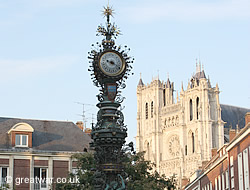
Some of the regions where the WW1 battles took place have seen a large increase in visitors over the past few years. In these cases there is a wide variety of accommodation to choose from. In other less frequently visited areas, however, the accommodation for visitors is more limited.
See our introductory page with links to our listings of accommodation on and around the battlefield areas:
Accommodation on the Western Front Battlefields
Tourist Information
Tourist Information offices can help with advice on travel and where to stay if you are planning a visit, and they will have the very latest information and advice for travellers.
|
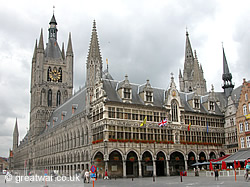
Visitor Centre for Ypres and the Westhoek, Belgium
The battlefields of the Ypres Salient are located in the province of West-Vlaanderen (West Flanders) in the Westhoek region, the westernmost province of the Flemish-speaking region in Belgium. The Visitor Centre for Ypres (the city is known locally by its Flemish name of Ieper) can offer advice in English, Dutch, French and German, providing information on all aspects of visiting the city and its surroundings.
See our page about the Visitor Centre for Ypres and the Westhoek at:
Visitor Centre for Ypres and the Westhoek, BelgiumTourist Information for the Somme & Picardie, France
|
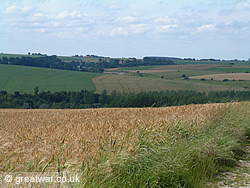
The battlefields of the Somme are located in the Département de la Somme. This is the region of Picardie in northern France.
For information on tourist offices and tourist information for visitors to the Somme see our page at:
Tourist Information for the Somme & Picardie, France
Battlefield Remains
|
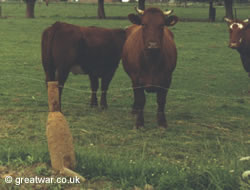
Visitors to the battlefields should be aware that even over 90 years since the end of the First World War there are still dangers posed by unexploded ammunition. DO NOT TOUCH or pick anything up if you are not sure what it is or if it looks like a piece of ammunition.
Every year several thousand artillery shells of all sizes are found in the ground by farmers, construction workers and builders. This is often called “The Iron Harvest”. Particularly in the ploughing seasons in rural areas shells can often be seen placed at the side of a field by a farmer for safe collection by the authorities.
Exploring the battlefields off the beaten track will be a rewarding experience, especially if you are carrying out research in the footsteps of a relative. Visitors are reminded to ask permission if you want to go onto private land. Be mindful of your own safety if exploring any battlefield remains such as bunkers or tunnels which are not designated public sites.
For more information about the remains to be seen on the Western Front battlefields see our information at:
Battle Remains on the Western Front
Western Front Battlefields by Region
|
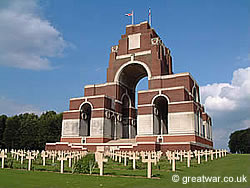
By way of an introduction to the battlefields of the Western Front we have shown them on our map and listed them by region.
Western Front Battlefields by Region
The following pages each provide an index to three of the well-visited battlefield areas comprehensive listings and locations of military cemeteries, main memorials, battle remains, museums and accommodation:
The Ypres Salient, Flanders, Belgium