Monuments and Memorials in French Flanders and Artois, France
The 1914-1918 battlefield area of French Flanders and Artois lies to the south of the Ypres Salient battlefields from the French-Belgian border to the south and east of Arras. In addition to the many cemeteries in the area there are memorials and monuments to commemorate those casualties who have no known grave, and particular military units which saw action in this region.
This list gives the locations of some of the more well known monuments and memorials in this battlefield sector.
-
1st Canadian Division Memorial
50.349104
2.815225
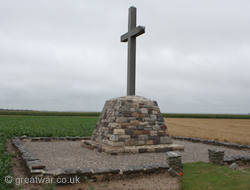
The memorial commemorates the soldiers of the 1st Canadian Division who fell in the fighting during the Battles of Arras on 4 March, 9 April and 23 July 1917. The original memorial was put up on this spot by their comrades at Christmas 1917.
-
9th (Scottish) Division Memorial (near Point du Jour British Cemetery)
50.31341031706512
2.8354771435260773
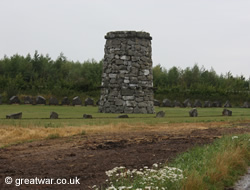
The memorial commemorates the 9th (Scottish) Division at the Battle of Arras, 9th April 1917.
-
12th Division Memorial, La Chapelle de Feuchy
50.26878484074076
2.858174666762352
The memorial cross, in the form of a cross in the cathedral of York Minster, England, marks the place where the 12th Division was in action in April 1917.
A similar memorial to the 12th Division is located at Malassie Farm, Epehy (division took the village in September 1918).
-
37th Division Memorial, Monchy-le-Preux
50.26979805978048
2.891610413789749
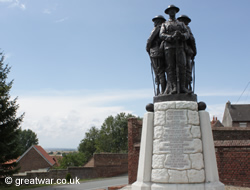
The memorial commemorates the action by the 37th Division on 11th April 1917 in the Battle of Arras.
-
55th (West Lancashire) Division, Givenchy-les-la-Bassée
50.52802894829039
2.7620060741901398
-
63rd Royal Naval Division Memorial, Gavrelle
50.329285
2.878064
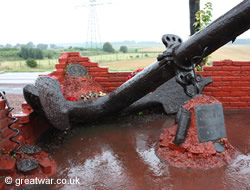
Memorial to the 63rd Royal Naval Division in action in April 1917 at Gavrelle.
-
D Battalion, Heavy Battery Machine Gun Company Tank Memorial, Bullecourt 1917
50.192811
2.929718
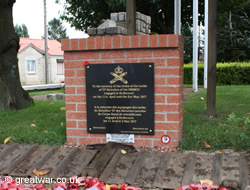
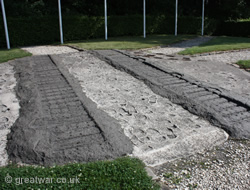
A memorial in the centre of the village next to the church. The memorial was put up by the French organisation le Souvenir Français Arras branch in April 2010. The memorial remembers the crews of “D” Battalion crews of the HBMGC engaged at Bullecourt on 11 April and 3 May 1917. The memorial features a section of tank track.
-
Ablain St-Nazaire French Military Cemetery & Memorial “Notre Dame de Lorette”
50.401060325877175
2.7190840244293213
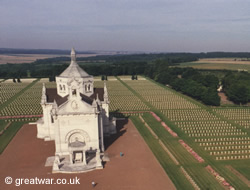
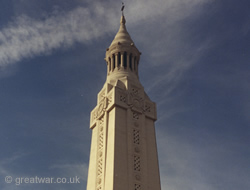
The Lantern Tower monument stands in the centre of the largest French military cemetery in the world with a total number of 40,057 casualties, almost all of whom are from the First World War.
Ablain St-Nazaire French Military Cemetery “Notre Dame de Lorette”
-
L’Anneau de la Mémoire - The Ring of Remembrance
50.399673
2.719980
An ellipse-shaped monument featuring the names, in alphabetical order, of 579,606 soldiers of 40 nationalities who fell in the Nord-Pas-de-Calais area in the First World War.
The memorial was inaugurated on 11 November 2014. It was designed by architect Philip Prost. It is situated on the high ground at the summit of Notre Dame de Lorette plateau, next to Ablain St-Nazaire French Military Cemetery & Memorial (known as “Notre Dame de Lorette”).
For information about the Ring of Remembrance memorial and a link to download the app listing the names on this memorial visit the Lens' 14-18 website:
Website: www.lens14-18.com Ring of Remembrance
-
Arras Memorial to the Missing, Arras
50.28708695074093
2.7601660788059235
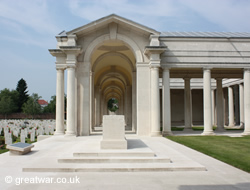
There are 34,796 British and Commonwealth casualties of the First World War commemorated on the Arras Memorial to the Missing.
-
Arras Flying Services Memorial, Arras
50.28696870019768
2.7604128420352936
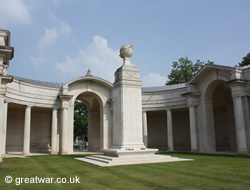
The Arras Flying Services Memorial commemorates the names of 990 airmen who were killed while serving on The Western Front during the First World War and who have no known grave.
-
Australian Memorial Park, Bullecourt
50.194659
2.938210
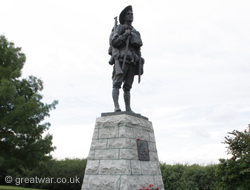
The Memorial Park commemorates all those Australians who fought and fell at the Battles of Bullecourt, April to May 1917.
-
Australian Memorial Park, Fromelles
50.618016
2.835452
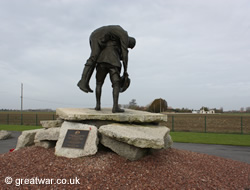
The Memorial Park commemorates all those Australians who fought and fell at the Battle of Fromelles, 19-20 July 1916.
-
Bullecourt 1917 Memorial
50.192881
2.929704
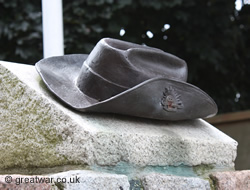
A memorial in the centre of the village next to the church. The memorial was put up by the French organisation le Souvenir Français in May 1981 in remembrance of the Australian and British soldiers who fell in the area during the Battles of Bullecourt, April to May 1917. The memorial features an Australian hat.
-
Cambrai Memorial to the Missing, Louverval
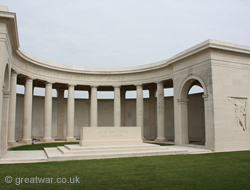
50.13679397542167
3.015342056751251
On this memorial there are over 7,000 inscribed names of servicemen of the United Kingdom and South Africa. They were casualties who lost their lives during the Battle of Cambrai in November and December 1917 and their graves are not known.
-
Canadian Corps Artillery Memorial, Thélus
50.355796
2.789972
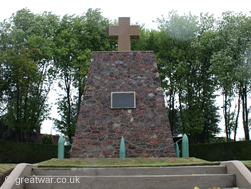
The memorial commemorates the men of the Canadian Corps Artillery who fell during the Vimy operations in April 1917.
-
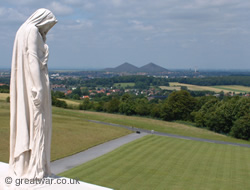
Canadian National Vimy Memorial
50.37955468778929
2.774122953414917
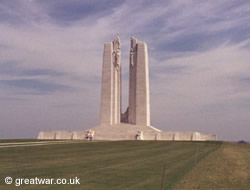
The location of the highest point of the Vimy Ridge at Hill 145 was selected as the location for a memorial to all Canadians who served in Canadian forces during the First World War. The memorial bears the names of 11,169 missing Canadians who died and who do not have a known grave.
-
Cité Bonjean New Zealand Memorial, Armentières
50.686489404347974
2.863132059574127
The Cité Bonjean New Zealand Memorial commemorates 47 officers and men of the New Zealand Division who fell in action in the area of Armentières and who have no known grave. This is one of seven such memorials to Missing New Zealand Forces on the Western Front.
-
Demarcation Stone, La Chapelle de Feuchy
50.26919630284901
2.8575067967176437
A Demarcation Stone on the N39, a few kilometres east of Arras, marks the furthest westerly point in the line to which the German Army advanced in its spring offensive of 1918. The German advance of 1918 was held here by the British Army.
-
Dury Crossroad Canadian Memorial
50.23400190468969
2.9971566796302795
-
Kingston Upon Hull Memorial, Oppy
50.347198
2.889284
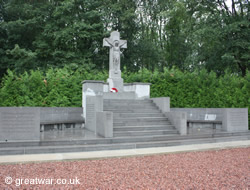
A memorial dedicated to the memory of all men of Kingston-upon-Hull who gave their lives in the Great War 1914-18. The land was given for the memorial by the Count and Countess Bouexic de la Driennays in memory of their son, who served with the 504th Regiment of Tanks and was killed at Goyencourt on 8 August 1918.
-
Le Touret Memorial to the Missing
50.55998624841117
2.723134160041809
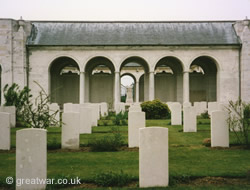
13,402 casualties are commemorated on the memorial, which is located at the Le Touret Military Cemetery. The period covered by the memorial is from October 1914 to 24 September 1915, the day before the start of the Battle of Loos. The battles in which the casualties died include: La Bassée (10 October – 2 November 1914), Neuve Chapelle (10 – 12 March 1915), Aubers Ridge (9 – 10 May 1915), and Festubert (15 – 25 May 1915).
-
Loos Memorial to the Missing
50.46071926333973
2.7713173627853394
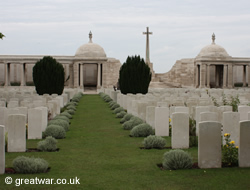
Loos Memorial to the Missing is in the same location as Dud Corner British Cemetery, on the D943 Lens-Mazingharbe road.
-
Monument du Flambeau, La Targette French Memorial
50.35458935518684
2.7485279738903046
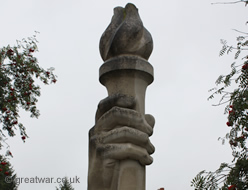
This is a memorial to the destruction of the village of La Targette in 1915. It was unveiled in 1932 and is located on the crossroads in the centre of the small village of La Targette. It is a large stone sculpture of a hand holding up a flaming torch.
-
Monument to the Nations, Flesquières
50.119806
3.122370
A monument made as a dedication to the memory of the men of all nations who fought, suffered and died in this area during the First World War.
-
Neuve-Chapelle, Indian Memorial to the Missing
50.5750363355033
2.7747854590415955
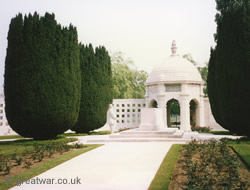
This memorial commemorates over 4,700 Indian soldiers and men working as labourers who died on the Western Front and who have no known grave. Neuve Chapelle was the area where the Indian Corps served in its first action on the Western Front in 1915.
For further information about this memorial and the work of the Commonwealth War Graves Commission (CWGC) visit the CWGC website:
Website: www.cwgc.org Neuve Chapelle Memorial
-
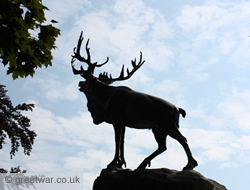
Newfoundland Regiment Memorial, Masnières
50.123402
3.211811
One of five caribou monuments to commemorate the actions of the Newfoundland Regiment on the Western Front.
-
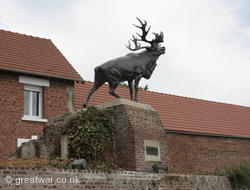
Newfoundland Regiment Memorial, Monchy-le-Preux
50.27061667701528
2.8933538496494293
One of five caribou monuments to commemorate the actions of the Newfoundland Regiment on the Western Front.
-
Notre Dame de Lorette, French Military Cemetery & Memorial
50.401060325877175
2.7190840244293213
See Ablain St-Nazaire French Military Cemetery & Memorial:
Ablain St-Nazaire French Military Cemetery “Notre Dame de Lorette”
-
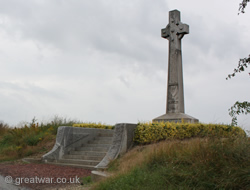
Seaforth Highlanders Memorial, Fampoux
50.30835869725704
2.867702543735504
The plaque reads: “In memory of the officers, warrant officers, non-commissioned officers and private soldiers of the Seaforth Highlanders (Ross-shire Buffs, the Duke of Albany's) who gave their lives for their King and country in the Great War 1914-18.”
-
V.C. Corner Australian Cemetery and Memorial, Fromelles
50.61972551032044
2.8337109088897705
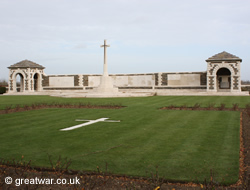
Over 400 Australian soldiers are commemorated on the memorial.
-
Vimy Memorial: see Canadian National Vimy Memorial
50.37955468778929
2.774122953414917
-
Vis-en-Artois Memorial to the Missing
50.246814460905654
2.9503923654556274
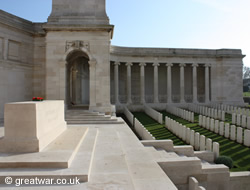
The Vis-en-Artois Memorial commemorates the names of over 9,000 British, Irish and South African casualties who died in the period from 8th August 1918 until the Armistice on 11th November 1918.
Further Reading


The Silent Cities
An Illustrated Guide to the War Cemeteries & Memorials to the Missing in France & Flanders 1914-1918 by Sidney C. Hurst


Remembered
The History of the Commonwealth War Graves Commission by Julie Summers, Brian Harris and Ian Hislop
Features images by award winning photographer Brian Harris, never before seen photographs from the Commission's own archives and a new history of the Commission by renowned author Julie Summers.


On Fame's Eternal Camping Ground
A Study of First World War Epitaphs in the British Cemeteries of the Western Front by Trefor Jones
Based on five years' research, this book presents more than 1,500 epitaphs on First World War headstones in the cemeteries of Belgium and France. These tributes to young sons, husbands and brothers of that lost generation, buried far from home, provide an eloquent and moving demonstration of the power and beauty of language.


Lutyens and the Great War
by Tim Skelton & Gerald Gliddon
Sir Edwin Lutyens did many works in connection with the the First World War; Thiepval memorial on the Somme for example. This book describes the variety of these moving works and the stories behind them.


The Unending Vigil
This book by Philip Longworth tells the Commission's story from its beginnings on the Western Front during the First World War under the direction of Fabian Ware, describing the contribution made by the architects, sculptors, engineers, horticulturalists and men of letters who combined to create the war cemeteries and memorials that are so familiar today.
Related Topic
|
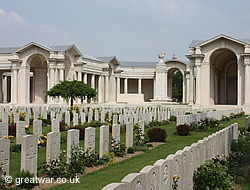
For information and a listing of the French, British & Commonwealth, German and Portuguese cemeteries see our page:
Cemeteries on the French Flanders & Artois Battlefields