The Somme Battlefields of WW1, France

The 1914-1918 battlefields of the Somme are located in the beautiful, rural landscape of the region of Picardy and the Département de la Somme. The River Somme flows through the Vallée de la Haute Somme (Upper Somme Valley) in the east of the Département. Winding its way through a gently rolling landscape the beautiful Somme river, with its famous marshes (marais) and swamps (marécages), makes its way westwards through the battlefield area from St. Quentin in the east, through Amiens and on to the coast.
Visitors to the Somme battlefields and the region can visit a number of private and public museums, preserved battle sites and the many cemeteries and monuments to those who fought and those who died in action. A range of hotel accommodation is available in the larger towns and nearby cities, and a number of bed and breakfast or self-catering cottages can be booked.
Battles of the Somme
|
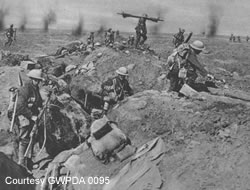
- First Battle of Picardy 1914 (22 - 26 September 1914)
- Battles of the Somme 1916 (1 July - 18 November 1916)
- First Battles of the Somme 1918 (21 March - 5 April 1918)
- Second Battles of the Somme 1918 (8 August - 3 September 1918)
For more information about the battles see:
Battles of the SommeBattle Remains
|
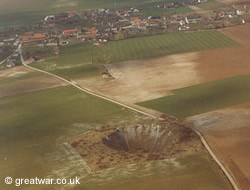
There are numerous sites to visit on the Somme battlefields where remains of the fighting can be visited. These include trenches and mine craters.
Battle Remains on the Somme Battlefields
Monuments and Memorials
|
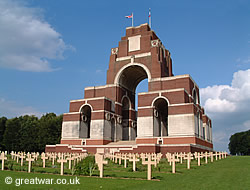
Memorials on this battlefield commemorate military units, individuals and a number of memorials commemorate the thousands of men serving with the military on both sides of the wire known to have been killed but whose remains have never been discovered or identified.
Memorials and Monuments on the Somme BattlefieldsCemeteries
|
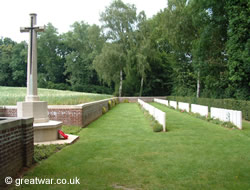
The 1914-1918 battlefields of the Somme are the final resting place of many thousands of soldiers who served with the British, French and German Armies during the Great War.
Cemeteries on the Somme BattlefieldsMuseums
|
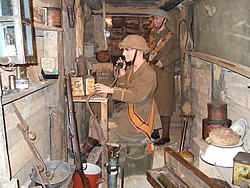
Visitors to the battlefields in the Département de la Somme will find a number of public and private museums.
Museums on the Somme battlefieldsEvents
|
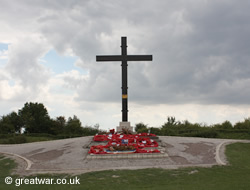
Commemorative events are held on the Somme battlefields according to an annual or special anniversary of a battle. Private ceremonies and Remembrance events often take place in relation to a particular monument or memorial, and there are exhibitions and events held at the various museums in the area.
Somme EventsTourist Information
|
Where to Stay
For a variety of suggested accommodation, including Bed & Breakfast, Self-catering, hotels, hostels and campsites on the Somme battlefields, see our page at:
Places to Eat
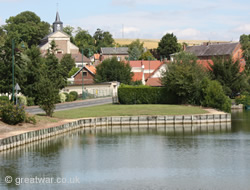
The Somme battlefields are in a rural area of Picardy. These are some suggestions of places to eat when you are out and about.
Tourist Offices
See our page for contact details and websites of the tourist offices and information portals in the area:
Tourist Offices: Somme & Picardie
Further Reading

The Somme (Hardback)
by Peter Barton
Over WW1 50 panorama photographs of the Somme battlefield. Published by Constable (24 Feb 2011), ISBN-10: 1849017190; ISBN-13: 978-1849017190

The First Day on the Somme: 1 July 1916 (Paperback)
by Martin Middlebrook
Highly recommended. 384 pages. Published by Penguin; New Ed edition (29 Jun 2006); ISBN-10: 0140171347; ISBN-13: 978-0140171341

Forgotten Voices of the Somme: The Most Devastating Battle of the Great War in the Words of Those Who Survived (Paperback)
by Joshua Levine
304 pages. Published by Ebury Press (1 Oct 2009); ISBN-10: 0091926289; ISBN-13: 978-0091926281


Missing but Not Forgotten: Men of the Thiepval Memorial - Somme [hardcover]
by Ken Linge and Pam Linge
This excellent book is published after more than 10 years of dedicated research into the men commemorated on the Thiepval Memorial to the Missing. Ken and Pam Linge are behind the Thiepval Database Project and have been collecting biographical information on the missing men since 2003. 288 pages. Published by Pen & Sword Military (2 Sept 2015), ISBN-10: 1473823587; ISBN-13: 978-1473823587

Somme Mud (Paperback)
by E P F Lynch
“It's the end of the 1916 winter and the conditions are almost unbelievable. We live in a world of Somme mud. We sleep in it, work in it, fight in it, wade in it and many of us die in it. We see it, feel it, eat it and curse it, but we can't escape it, not even by dying...” 432 pages. Published by Bantam (9 Oct 2008); ISBN-10: 0553819135; ISBN-13: 978-0553819137

This Carnival of Hell
Edited by Richard A. Baumgartner
The Somme, 1916 — one of the biggest, longest and most terrifying battles ever fought. For a million or more German soldiers the toll was immense. At least 200,000 of them perished in this small region of France between July and November 1916. Only a few previously published works have focused attention on the German side of the Somme battle. This book, featuring first-person narratives from more than 85 participants and dozens of rare photographs, provides a compelling picture of what it was like for the German soldier at the apex of combat on the Western Front.


Walking the Somme (Battleground Europe) (Paperback)
by Paul Reed
240 pages. Published by Pen & Sword; 2nd Revised Edition (19 May 2011); ISBN-10: 1848844735; ISBN-13: 978-1848844735

Map of the Somme Battlefield 1916 (Fir Tree Aerial Maps)
by Richard Chandler
A2 size 594 x 420mm. Available flat, laminated or folded. £1.00 will be donated to the charity Combat Stress for each Somme map purchased from the website www.themapcentre.com
Acknowledgements
(GWPDA) Photograph 0095. With grateful thanks to the Great War Primary Document Archive (GWPDA):
Website: www.gwpda.org Photos
(1) Photograph courtesy of the Musée Somme 1916, Albert.
