Monuments & Memorials on the Ypres Salient, Belgium

There are many monuments and memorials on the Ypres Salient battlefields. They range in size from official monuments commemorating thousands of people missing in action and who have no known grave to private memorials dedicated to individuals or to military units. Some are simply places or scars on the landscape from the battles which have been preserved on the old battlefields. Some have been put up to mark a particular event.
This page lists and locates the monuments to be found on the Ypres Salient battlefields.
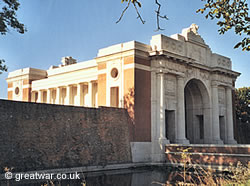
Memorials to the Missing of WW1
|
In the Ypres Salient battlefields there are approximately 90,000 British and Commonwealth soldiers whose remains cannot be identified for burial in a grave marked with their name. Similarly, there are also believed to be about 90,000 German soldiers whose unidentified remains have also never been found in Flanders. There were many French soldiers found on the battlefields whose remains could not be identified.
For the 90,000 missing British Forces there are four memorials in the Ypres Salient battlefields which cover the whole period of the First World War, except the months of August and September 1914:
- Menin Gate Memorial to the Missing
- Messines Ridge (New Zealand) Memorial
- Tyne Cot Memorial to the Missing
- New Zealand Memorial (Tyne Cot Cemetery)
The Ploegsteert Memorial to the Missing south of Messines is technically outside the sector known as the Ypres Salient, and commemorates the missing of the Lys battlefield sector. Its proximity to Ypres means that many visitors to the Ypres Salient include it in a visit to the area.
Names of missing German soldiers are inscribed on oak panels and bronze tablets at Langemark German cemetery and French soldiers are commemorated in ossuaries.
List and Locations of Monuments & Memorials
-
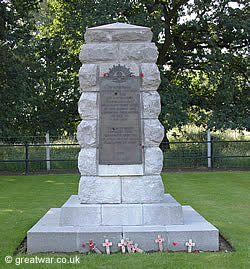
1st Australian Tunneling Company Memorial, Hill 60, Zillebeke
50.824179
2.928243
The memorial commemorates the men of the 1st Australian Tunneling Company who gave their lives in the tunneling and defensive operations from 1915-1918 in this location.
The memorial is located at the Hill 60 Battlefield Memorial Site in Zillebeke.
-
1st Monmouthshire Regiment Memorial
50.876045
2.930421
The memorial is dedicated to Second-Lieutenant Henry Anthony Birrell-Anthony and all officers and men of the 1st Monmouthshire Regiment who fell in the Second Battle of Ypres in May 1915.
2/Lt. Birrell-Anthony was one of 7 officers and 176 other ranks who died on 8 May 1915. An eighth officer died in German captivity at Roeslare a little later from his wounds. Birrell-Anthony's remains have not been found and he and many of his comrades are commemorated on Panel 50 of the Menin Gate Memorial to the Missing in Ypres.
The Monmouthshire Regiment monument is located on the south side of Roeselarestraat north-east of Ypres.
-
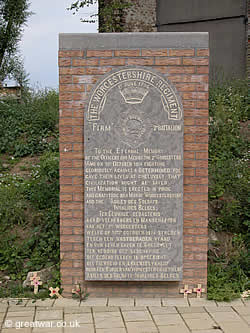
2nd Battalion Worcestershire Regiment Memorial
50.833919
2.995465
The monument commemorates the part played by the 2nd Battalion the Worcesters in the successful counter-attack on 31 October 1914 to retake the village.
This action blocked the advance of the German Army towards Ypres at a crucial time during the First Battle of Ypres.
The monument is situated on the site of the former 1914 windmill at Gheluvelt.
-
9th Battalion The London Regiment (Queen Victoria Rifles) Memorial, Hill 60, Zillebeke
50.824161
2.929831
The memorial commemorates the men of the Queen Victoria Rifles (9th Battalion The London Regiment) in action in this location in April 1915.
The memorial is located at the Hill 60 Battlefield Memorial Site in Zillebeke.
9th Battalion The London Regiment (Queen Victoria Rifles) Memorial, Hill 60
-
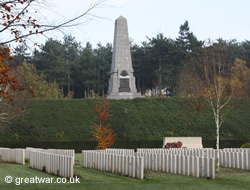
5th Australian Division Memorial
50.856134
2.992326
The memorial commemorates the actions by the 5th Australian Division in the area of Polygon Wood, north-east of Ypres.
The memorial is located in Buttes New British Cemetery in Polygon Wood.
-
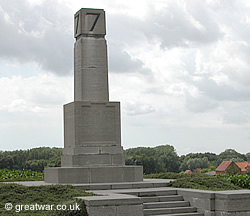
7th Division Memorial
50.871491
3.002768
The monument commemorates the actions by the 7th Division in this location in October 1914 and in the Third Battle of Ypres 1917.
The monument is located on the south side of the Broodseinde-Beselare road, the Beselarestraat, just south of the village of Broodseinde.
-
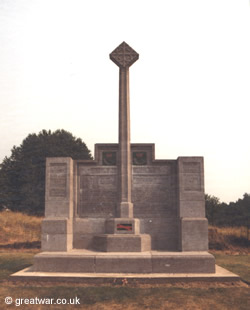
14th Light Division Memorial, Hill 60, Zillebeke
50.823981
2.927811
A memorial dedicated to the officers and men of the 14th Light Division.
The memorial is located on the battlefield memorial site of Hill 60 at Zillebeke. (Prior to 1978 the memorial was situated at Railway Wood, near Bellewaerde north of the Menin Road but it had to be moved.)
-
16th Irish Division Memorial
50.784535
2.876701
The memorial commemorates the action by 16th Irish Division in this location in June 1917 in the Battle of Messines 1917.
On 7 June the 16th Irish Division and the 36th Ulster Division fought side by side in the Battle of Messines. They captured the ruined village of Wytschaete (now named Wijtschate).
The memorial is located on the north side of the Kemmel-Wijtschate road at the western end of Wytschaete village and close to the entrance to Wytschaete Military Cemetery.
-
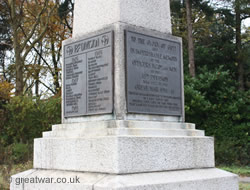
18th Division Memorial, Menin Road
50.843305
2.961808
A memorial dedicated to the officers and men of the 18th Division.
The memorial is located on the south side of the Menenstraat (the Menin Road) N8, approximately 2 kilometres east of Hooge.
-
19th Western Division Memorial
50.794771
2.901474
The memorial is dedicated to the actions by the men of the 19th Western Division in this location from June 1917 to 1918.
The memorial is located in the south sector of the Ypres Salient at the crossroads of the N336 Rijselstraat and the Hollebekestraat north of Oosttaverne village.
-
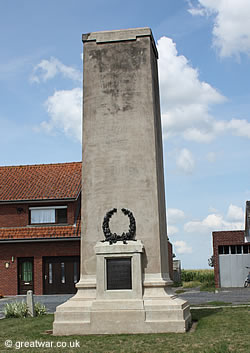
20th Light Division Memorial
50.924217
2.913268
Dedicated to the officers and men of the 20th Light Division.
The monument is on the Boezingestraat on the west side of Langemark village.
-
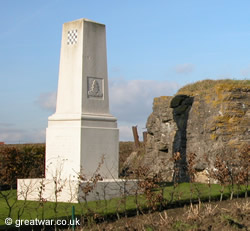
34th Division Memorial
50.924217
2.913268
Dedicated to the officers, warrant and non-commissioned officers and men of the artillery and engineers of the 34th Division who fought near this location during the Third Battle of Ypres in October and November 1917.
The monument is approximately 500 metres north of Langemarck German Military Cemetery. The monument is located on Beekstraat next to a battlefield bunker.
-
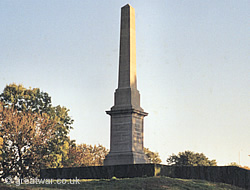
49th West Riding Division Memorial
50.870997
2.873901
The monument commemorates the officers and men of the 49th West Riding Division.
The monument is located on the west bank of the Ieper-Ijzer canal with access to the memorial through Essex Farm Cemetery.
-
50th Northumbrian Division Memorial
50.870080
2.918198
Dedicated to all ranks of the 50th Northumbrian Division who fell in the Great War. This memorial is also commemorating the men of this division who gave their lives in the Second World War in the fight to liberate France, Belgium and Holland.
The monument is located on the south side of the Wieltje road just off the N313 north-east of Ypres.
-
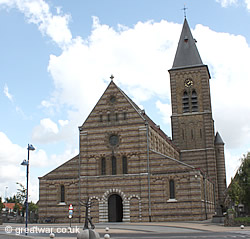
66th Division Memorial Window, Passchendaele Church
50.900295
3.021044
A memorial window in the north side of the rebuilt church at Passchendaele (Passendale) commemorates the officers and men of the 66th Division.
The church is located in the centre of Passendale village.
-
85th Canadian Infantry Brigade Memorial, Passchendaele
50.889891
3.014234
Dedicated to the officers and men of the Nova Scotia Highlanders, the 85th Canadian Infantry Brigade, who captured the ridge in November 1917.
The monument is on the east side of the N303 Passendale-Broodseinde road, a little to the south of the village of Passendale (Passchendale). A grassy path leads to the memorial situated in the centre of a field.
-
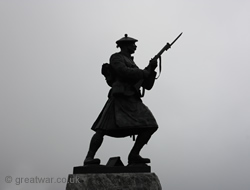
Black Watch Corner Memorial
50.848424
2.981967
The memorial was unveiled in 2014. It commemorates the actions by the 1st Battalion The Black Watch (Royal Highlanders) and the part played by officers and men in the battles in France and Belgium from August 1914 to November 1918. A British force of just under 8,000 men held up an attack on the British line by superior numbers of some 17,000 German troops, including elite Prussian Guardsmen. The gallant action by the 1st Battalion Black Watch, the Scots Guards, the Queen's Own Cameron Highlanders, 1st Battalion the Northamptonshire Regiment, 2nd Battalion Ox & Bucks, 2nd Battalion the Worcesters, British and French artillery halted the German attempt to break through the Allied line to capture Ypres.
The original name Black Watch Corner was given to a Black Watch strongpoint south-west of the wood. After the battle here the name was given to the south-west corner of the wood on British trench maps.
The memorial is located at the south-west corner of Polygon Wood (Polygonbos), a place where the battalion played a crucial role on 11 November 1914.
-
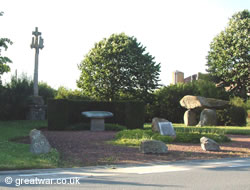
Breton Memorial to the French 87th and 45th Divisions, April 1915
50.897336770841385
2.874130457639694
The memorial commemorates French troops killed and wounded in the German gas cloud attack on 22 April 1915 and those who fought in the Second Battle of Ypres.
The memorial comprises an original 16th century calvaire (crucifix) in the traditional Breton style from Brittany. The monument is located behind the French front line held by the 87th Territorial Division and 45th Algerian Division in April 1915. It is situated at the Carrefour de la Rose (known as Rose Crossroads on British Army trench maps) on the Langemarck-Boezinge road, about 1 kilometre west of Pilkem.
For a fascinating look at the background to the Second Battle of Ypres and the decision by the German Supreme Command to carry out a trial with the new weapon of chlorine gas, read our Battle Study section:
Battle Study: Second Battle of Ypres -
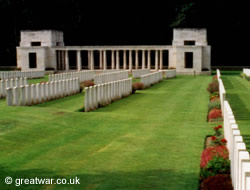
Buttes New British Cemetery (New Zealand) Memorial, Zonnebeke
50.855499140804156
2.991334944963455
A memorial in Buttes New British Cemetery in Polygon Wood commemorates 378 officers and men of the New Zealand Division who have no known grave.
-
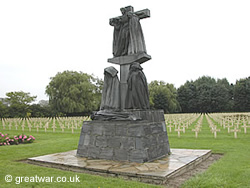
Calvaire Breton Monument, St. Charles-de-Potyze Cemetery
50.863438
2.926489
Calvary sculpture depicting grieving women for French soldiers lost in battle.
A large monument in the style of a calvaire typical of the Breton region of north-west France. For more information about the sculpture see our page at:
-
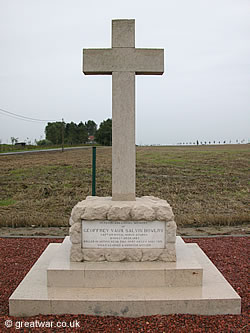
Captain G V S Bowlby Memorial
50.855602
2.930348
A private memorial to Captain Bowlby of the Royal Horse Guards.
Captain Geoffrey Vaux Salvin Bowlby was killed in action on 13 May 1915 during the Second Battle of Ypres. He was buried near this place but his remains and burial place were subsequently lost.
Latitude 50.855602; Longitude 2.930348
The memorial is located north-east of Ieper on the Begijnenbosstraat, accessible from the Zonnebeekseweg or the Oude Kortrijkstraat.
His name is inscribed on Panel 3 for the Royal Horse Guards on the Menin Gate Memorial to the Missing.
-
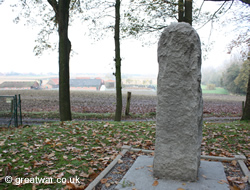
Captain E J Brodie Memorial
50.848130
2.970945
A private memorial to Captain Brodie of 1st Battalion Queen's Own Cameron Highlanders.
Captain Ewen James Brodie was killed in action on 11 November 1914 during the First Battle of Ypres. He was buried in Glencorse Wood. After the war his body and grave had been lost. His name is inscribed on Panels 38-40 for the Cameron Highlanders on the Menin Gate Memorial to the Missing. In 1923 Captain Brodie's wife placed a Scottish stone memorial at the known location of his original burial place.
Latitude 50.848130; Longitude 2.970945
The memorial is located on the northern edge of the Nonnebossen Wood via an access track/non-metalled road into the wood from the Kabouterbosstraat/Wulvestraat junction. It is about 5 minutes' walk (200 metres, then turn right at a junction of tracks for another 25 metres). The private memorial is now cared for by the Commonwealth War Graves Commission.
-
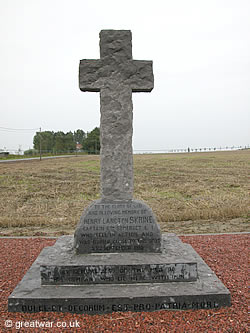
Captain H L Skrine Memorial
50.855554
2.930380
A private memorial to Captain Skrine of the 6th Somerset Light Infantry.
The captain was killed on 25 September 1915 and was buried near the location of the memorial. His body and burial place was lost, likely due to subsequent fighting in this place during the course of the war.
Latitude 50.855554; Longitude 2.930380
His name is inscribed on Panel 21 of the Menin Gate Memorial to the Missing.
-
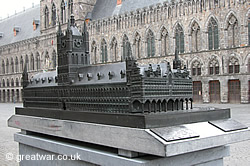
Cloth Hall (Lakenhalle) Bronze Replica
50.851090
2.886499
A bronze replica of the Cloth Hall (Lakenhalle) presented to Ypres as a peace memorial.
-
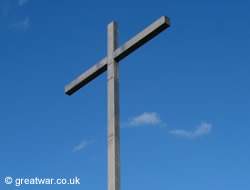
Cross of Reconciliation, Lizerne
50.91828884855287
2.8409917652606964
This is a memorial to French troops gassed by the German chlorine gas cloud of 22 April 1915.
Latitude 50.918289; Longitude 2.840992
The Cross of Reconciliation is an aluminium cross on the west side of the Ypres-Yser canal at Lizerne. The original memorial was destroyed during the German occupation of the area in the Second World War.
For the story behind the build-up to the Second Battle of Ypres and the decision by German Supreme Command to carry out a trial with the new weapon of chlorine gas in April 1915, go to our Battle Study section:
Battle Study: Second Battle of Ypres -
Demarcation Stone No. 6, Boezinge (Boesinghe)
50.893686
2.859380
Demarcation Stone No. 6, one of over a hundred similar monuments which stand along the Western Front, marking the point from which the Allied Armies began their offensive in the summer of 1918 and pushed the Imperial German Army to the west, leading to the Allied Advance to Victory and the end of the war.
Latitude 50.893686; Longitude 2.859380
This stone is located at the junction of Diksmuidseweg-Brugstraat in Boezinge.
For more information about the origin of these monuments go to our article at:
Demarcation Stone Monuments on the Western Front -
Demarcation Stone No. 15, Hellfire Corner
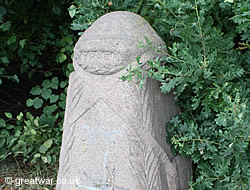
50.8489425301429
2.9163993895053864
Demarcation Stone No. 15, marking the point from which the Allied Armies began their offensive in the summer of 1918 and pushed the Imperial German Army to the west, leading to the Allied Advance to Victory and the end of the war.
Latitude 50.848943; Longitude 2.916399
This stone is located at the north-west corner of a busy road junction which is now a modern roundabout, but which was one of the most famous landmarks for the British Army on the Western Front in 1914-1918, Hellfire Corner.
For more information about the origin of these monuments go to our article at:
Demarcation Stone Monuments on the Western Front -
Demarcation Stone No. 16, Zillebeke
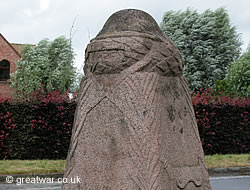
50.83100027432671
2.9115942120552063
Demarcation Stone No. 16
Monument marking the point from which the Allied Armies began their offensive in the summer of 1918 and pushed the Imperial German Army to the west, leading to the Allied Advance to Victory and the end of the war.
Latitude 50.831000; Longitude 2.911594
The monument is located on the Komensestraat off the N336 south of Ypres.
For more information about the origin of these monuments go to our article at:
Demarcation Stone Monuments on the Western Front -
Elsie & Mairie Memorial
50.854848
2.882377
Memorial to Elsie Knocker and Mairie Chisholm.
A life-size sculpture of two British ladies, Elsie Knocker and Mairie Chisholm, who travelled independently to Belgium in September 1914 to help wounded Allied servicemen. They set up a First Aid Post in the village of Pervyse, north of Ypres, and became known as the “Angels of Pervyse”. The memorial statue was dedicated in the autumn of 2014 and is located in the garden of the Ariane Hotel in Ypres/Ieper.
-
Francis Ledwidge Memorial
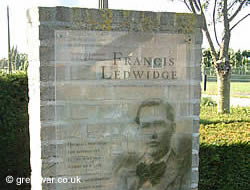
50.89788149540565
2.873805910348892
Memorial to the Irish poet.
The poet Francis Ledwidge enlisted in October 1914 and served in Gallipoli in the April 1915 campaign. He was killed in this place at the start of the Third Battle of Passchendaele. For more information see:
Francis Ledwidge Memorial -
Georges Guynemer Memorial, Poelkapelle
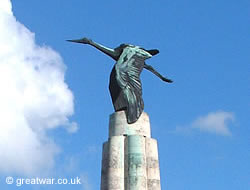
50.91763614120162
2.9565493762493134
Memorial to the French ace pilot Capitaine Georges Guynemer in Poelkapelle.
Capitaine Georges Guynemer was reported missing on 11 September 1917 in the Poelkapelle sector over the German lines. The stork with its wings down was the emblem for his squadron, Escadrille N.3.
Read more about Georges Guynemer on our page at:
-
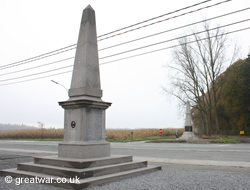
Gloucestershire Regiment Memorial, Menin Road
50.843621
2.961824
The memorial commemorates all ranks of the Gloucestershire Regiment who fought and fell in the campaigns of 1914-1918.
Latitude 50.843621; Longitude 2.961824
The memorial is located on the north side of the Menenstraat (the Menin Road) N8, approximately 2 kilometres east of Hooge.
-
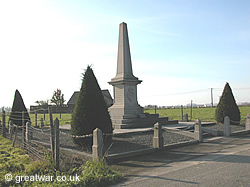
Grenadiers Memorial, Belgian Army, 22 April 1915
50.921405146300145
2.835214287042618
This is a memorial to the Belgian Grenadiers who held the Allied Front Line on 22 April 1915.
This regiment of the Belgian Army was holding the line on the west bank of the Ypres-Yser canal when there was a large-scale German attack following a cloud of poisonous gas on 22 April 1915. Although the gas did not affect the Belgian troops very badly here they were greatly outnumbered. The Grenadier Regiment held its position and the Allied line here held firm.
Latitude 50.921405; Longitude 2.835214
See our Battle Study pages at:
-
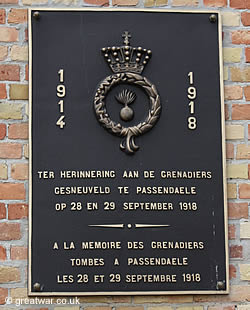
Grenadiers Memorial, Belgian Army, Passchendaele 1918
50.900471
3.020065
A memorial to the Belgian Grenadiers who fell in battle during the liberation of Passchendaele on 28 and 29 September 1918.
Latitude 50.900471; Longitude 3.020065
The memorial is located on the Passendale town hall in Passendaleplaats opposite the church.
-
Hedd Wyn Memorial Plaque
50.903255
2.900927
A memorial plaque to the Welsh poet Private Ellis Humphrey Evans, who wrote under the name of Hedd Wyn.
Latitude 50.903255; Longitude 2.900927
The plaque is located at the crossroads named Iron Cross on the First World War British trench map no. 28 Ypres. It is on the wall of the building opposite the pub called De Sportman.
This is the location where Hedd Wyn was wounded on the first day of the Third Battle of Ypres, 31 July 1917. He was serving with the 15th Battalion Royal Welsh Fusiliers. He died of his wounds and is buried in the nearby Artillery Wood Cemetery (Plot II, Row F, Grave 11). To find the location of the Artillery Wood cemetery it is listed alphabetically on our Ypres Salient cemeteries page at:
Cemeteries in the Ypres Salient -
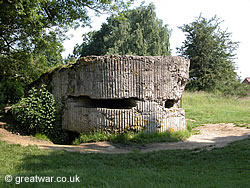
Hill 60 Memorial Site
50.82417590125372
2.929680347442627
Battle site of Hill 60, scene of tunnelling and mine warfare on both sides. The site is preserved as a memorial to the men on all sides who died here.
The WW1 battle area known as Hill 60 was so called on British military maps because the contoured height of the ground was marked at 60 metres above sea level.
For information see our page at:
Hill 60 Battlefield Memorial Site -
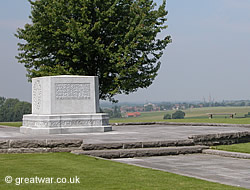
Hill 62 (Sanctuary Wood) Canadian Memorial
50.834496
2.947254
This is a monument to the Canadian Corps which put up a stubborn defence against a German attack on the high ground of the Allied Front Line between Mount Sorrel and the double summit of Hill 61 and Hill 62 in June 1916.
The memorial is maintained by Veterans Affairs Canada/Anciens Combattants Canada.
Website: www.veterans.gc.ca
See our page about the memorial on this link below:
-
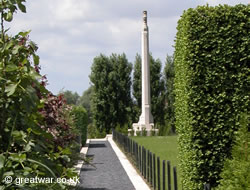
The Household Cavalry Memorial, Zandvoorde
50.810706
2.982265
A monument to the 1st and 2nd Life Guards and Royal Horse Guards who died fighting in France and Flanders in 1914.
Latitude 50.810706; Longitude 2.982265
-
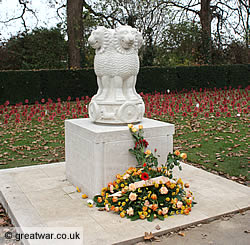
Indian Forces Memorial
50.851487
2.891314
Memorial to the Indian Forces who served in Flanders during the First World War.
Latitude 50.851487; Longitude 2.891314
For more information see our page at:
-
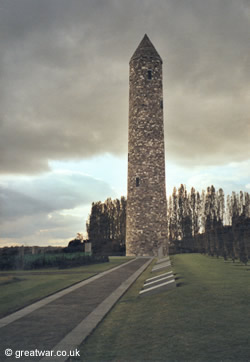
Island of Ireland Peace Park
50.75983097563025
2.8946077823638916
The memorial site is dedicated to the soldiers of Ireland, of all political and religious beliefs, who died, were wounded or missing in the Great War of 1914-1918. Irish men and women served with the Armies of Australia, Britain, Canada, New Zealand, South Africa and the United States.
For more information see our page at:
-
Kings Royal Rifle Corps Memorial, Hooge
50.845887
2.949311
A memorial dedicated to the officers and men of the KRRC, Kings Royal Rifle Corps.
Latitude 50.845887; Longitude 2.949311
The memorial is located on the north side of the Menin Road east of Hooge near the entrance to the Bellewaerde Theme Park.
-
Kitcheners Wood Memorial
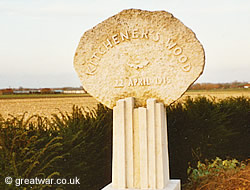
50.887593
2.918882
A memorial commemorating the Canadian troops who counter-attacked at Kitcheners Wood in an attempt to recapture the wood and four British heavy guns in it on the night of 22 April 1915 following the German gas trial attack.
Latitude 50.887593; Longitude 2.918882
The memorial is located next to a farm on Wijngaardstraat west of St. Juliaan.
For a fascinating study on the build-up to the German gas attack of 22 April 1915 and the involvement of the Canadian 1st Division on that day see our Battle Study at:
-
Lance Corporal S Frickleton, VC Monument
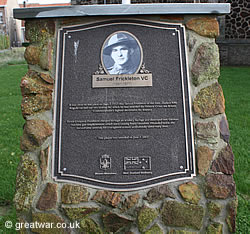
50.764113
2.898897
A private memorial to Lance Corporal Samuel Frickleton, VC.
Lance Corporal Frickleton (1891-1971) was serving with 3rd Battalion the New Zealand Rifle Brigade on 7 June 1917 on the first day of the Allied offensive against the German Front Line on the Wyteschate and Messines Ridge, called the Battle of Messines. Frickleton attacked and destroyed two German machine gun emplacements, saving the lives of many New Zealanders in his unit. For his gallantry he was awarded the Victoria Cross.
Latitude 50.764113; Longitude 2.898897
-
Langemark German Memorial to the Missing
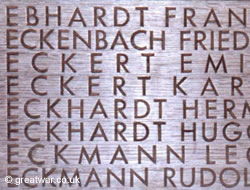
50.920163612143924
2.9173287749290466
Commemorative lists of names of the unidentified burials or missing German soldiers can be found at the Langemark German cemetery.
Many individual German graves and burial sites were destroyed during the battes of 1917 and 1918 in the Ypres Salient. Many thousands of German soldiers simply disappeared into the fields of Flanders without a trace.
Langemark German Military Cemetery -
Liverpool Scottish Memorial, near Railway Wood
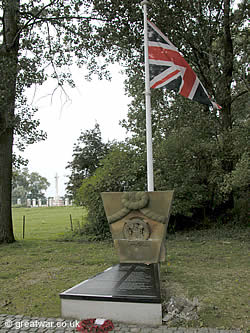
50.851948
2.939049
A memorial to the Territorial Army battalion, the Liverpool Scottish, was placed near Bellewaerde Farm as a private memorial in 2000. The battalion suffered heavy casualties in action at this location from 16 June 1915 in the Battle of Bellewaerde Ridge during the Second Battle of Ypres.
Latitude 50.764113; Longitude 2.898897
The memorial is located a little further on along the track from the R E Grave monument at Railway Wood.
-
London Scottish Memorial, Messines (Mesen)
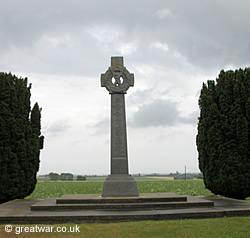
50.772588
2.893320
The memorial is dedicated to the officers and men of the London Scottish Regiment.
Latitude 50.772588; Longitude 2.893320
The memorial is located on the east side of the N365 Wyteschaete-Messines north of Messines (Mesen) village.
-
Mémorial aux Soldats Français 1914-1918
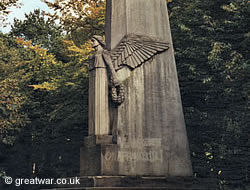
50.77811705751461
2.810501754283905
A French Army memorial to commemorate the French units engaged in combat in the battles for Mont Kemmel between 15-30 April 1918. On maps it is named Den Engel op de Kemmelberg - the Angel on the Kemmelberg.
Latitude 50.778130; Longitude 2.810529
The French memorial is located close to the summit of the Kemmelberg (Mont Kemmel).
Kemmelbergweg 34, 8956 Heuvelland, Belgium
-
Menin Gate Memorial to the Missing
50.85204856842089
2.891126275062561
The Menin Gate memorial contains the names of 54,896 officers and men from the British and Commonwealth Forces who fell before midnight on 16 August 1917 and who have no known grave in the Ypres Salient.
Menin Gate Memorial Daily Sounding of the Last Post -
Menin Gate Memorial Bronze Replica
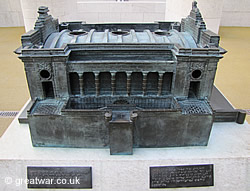
50.851796
2.891185
A bronze replica of the Menin Gate was presented to Ypres as a peace memorial.
Menin Gate Memorial Bronze Replica -
Messines Ridge (New Zealand) Memorial, Messines
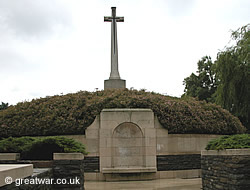
50.76501046189897
2.890744060277939
The Messines Ridge Memorial commemorates more than 800 men of the New Zealand Expeditionary Force who died fighting in the Messines sector in 1917 and 1918 and have no known grave.
-
Munster War Memorial
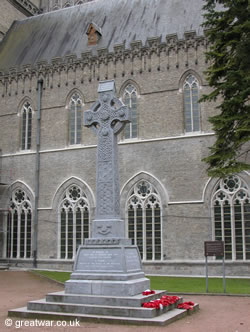
50.852223
2.885397
Memorial next to St. Martin's Cathedral in Ieper to the men of Munster in Ireland who served and died in the First World War.
-
New Zealand Battle Memorial, Messines (Mesen)
50.760428
2.891437
The memorial is dedicated to the officers and men of the New Zealand Division and their part in the battles on the Messines Ridge in June 1917.
Latitude 50.760428; Longitude 2.891437
The memorial is located on the south-western edge of Messines village, on the Rue des Neo-Zeelandais - Nieuwe-Zeelanderstraat off the N365.
-
New Zealand Memorial, 's Graventafel
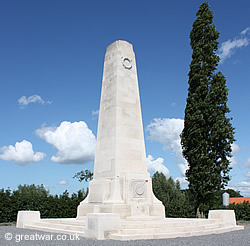
50.890825
2.979222
Dedicated to the officers and men of the New Zealand Division, who fought in this sector during the Third Battle of Ypres (the Battle of Passchendaele) in October 1917.
Latitude 50.890825; Longitude 2.979222
The monument is on the north side of the junction of Keerzelaarstraat and 's Graventafelstraat.
-
New Zealand Memorial, Tyne Cot Cemetery, Passchendaele
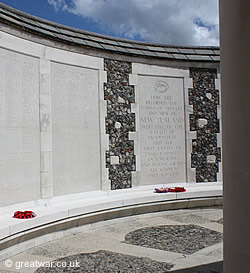
50.88743374047093
3.0005845427513123
The memorial commemorates more than 1,200 officers and men of the New Zealand Expeditionary Force who died fighting in the Passchendaele sector in October 1917 and who have no known grave.
For information about the memorial and its location at Tyne Cot Cemetery see our page at:
-
Passchendaele Canadian Memorial, Crest Farm, Passchendaele
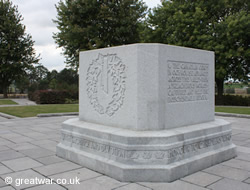
50.89779138510149
3.0132660269737244
Commemorating the troops of the Canadian Corps during the Second Battle of Passchendaele from 26 October to 10 November 1917.
The memorial is maintained by Veterans Affairs Canada/Anciens Combattants Canada.
Website: www.veterans.gc.ca
See our page about the memorial on this link below:
-
Ploegsteert Memorial to the Missing
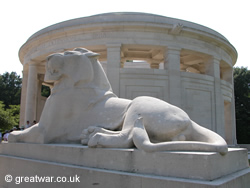
50.737804547867306
2.8821033239364624
Over 11,000 servicemen of the United Kingdom and South African Forces are commemorated on the Ploegsteert Memorial.
The memorial commemorates those missing in the battlefield sector south of the Ypres Salient between a northern boundary line of Caestre-Dranouter-Warneton to a southern boundary line from Haverskerque-Estaires-Fournes.
Event
A monthly Last Post ceremony is held on the first Friday of every month at 19.00 hours.
-
Princess Patricia's Canadian Light Infantry Memorial, Westhoek
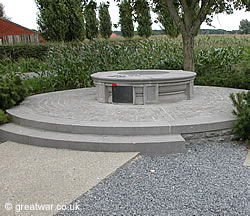
50.854537
2.950380
Latitude 50.854537; Longitude 2.950380
The memorial is located on the Frezenberg Ridge where the PPCLI fought and suffered very heavy losses in May 1915 during the Second Battle of Ypres.
-
R E Grave, Railway Wood
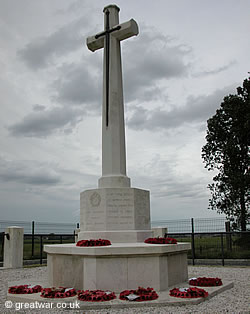
50.852289
2.937020
The memorial is situated over the location where 12 men were killed underground during the fight to defend Ypres between November 1915 and August 1917.
Their bodies could not be recovered. Eight of the men were Royal Engineers from the 177th Tunneling Company and the other four men were infantrymen attached from other units to this Tunneling Company.
Latitude 50.852289; Longitude 2.937020
The memorial can be seen on the left side of the Menin Road (N8) when approaching Hooge from the direction of Ypres.
-
St. George's Memorial Church, Ypres
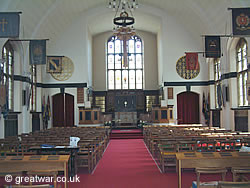
50.852198
2.883096
A living memorial built in Remembrance of those British and Commonwealth servicemen and women who died in the Ypres Salient.
The contents of the church, its furniture, artefacts, plaques, windows, font, plaques and regimental standards have been donated in memory of named individuals, military units, schools, workplaces, and community groups.
-
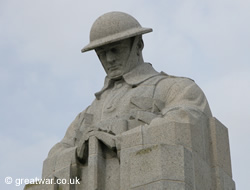
St. Julien Canadian Memorial, Vancouver Corner
50.899686709965266
2.9405272006988525
The memorial commemorates the Canadian 1st Division in action on 22 to 24 April 1915.
The memorial is maintained by Veterans Affairs Canada/Anciens Combattants Canada.
Website: www.veterans.gc.ca
See our page about the memorial:
-
Second Lieutenant T K H Rae Memorial
50.837929
2.944913
A private memorial to Second Lieutenant Thomas Keith Hedley Rae.
Second Lieutenant Thomas Keith Hedley Rae, serving with 8th Battalion the Rifle Brigade, died in action on 30 July 1915. He was buried near this location but his remains and burial place were subsequently lost.
Latitude 50.837929; Longitude 2.944913
His name is inscribed in the section of Panels 46-48 and 50 on the Menin Gate Memorial to the Missing.
-
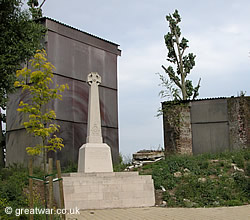
South Wales Borderers Memorial, Gheluvelt
50.833953
2.995540
The memorial commemorates the part played by the South Wales Borderers in the fight to hold Gheluvelt village during the First Battle of Ypres in October and November 1914.
Latitude 50.833953; Longitude 2.995540
The memorial is located at the site of the 1914 windmill in the eastern part of Gheluvelt village.
-
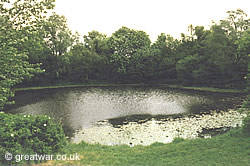
Spanbroekmolen Mine Crater Memorial — The Pool of Peace
50.77589565988041
2.861487865447998
The Spanbroekmolen Mine Crater, also known as Lone Tree Crater, is the site of the largest of 19 mines blown by the British Army in the early hours of the morning of 7 June 1917.
This signalled the launch of the Battle of Messines which was a successful offensive by the British Army to dislodge the German Army off the dominant high ground of the Wyteschaete Ridge. The mine crater filled with water as a result of the low water table and has been preserved as a memorial to those on all sides who lost their lives in the battle.
-
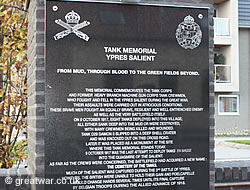
Tank Memorial Ypres Salient, Poelkapelle
50.917689
2.956856
The Memorial commemorates the 243 Great War Heavy Branch Machine Gun Corps and Tank Corps tank crewmen buried or commemorated within Belgium. Also commemorated is a single WW2 tank crewman buried nearby.
The memorial has it's own dedicated website:
Website: www.tankmemorial.vpweb.co.uk
-
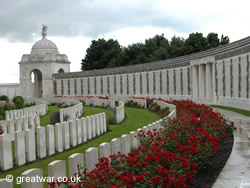
Tyne Cot Memorial to the Missing
50.887422347253136
3.000505417585373
The Tyne Cot Memorial to the Missing commemorates 34,887 names of men from the United Kingdom and New Zealand Forces who died from the date of 16 August 1917 and who have no known grave in the Ypres Salient.
-
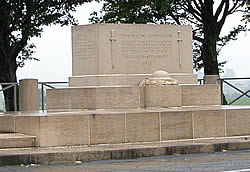
United States Memorial to 27th and 30th Divisions
50.79756860515482
2.8491510450839996
A memorial to the United States Army commemorating its part in the battles here in August and September 1918. The 27th and 30th Divisions in the United States Army fought near Wytschaete with the British Army from 18 August and 4 September 1918.
Latitude 50.797568; Longitude 2.849151
-
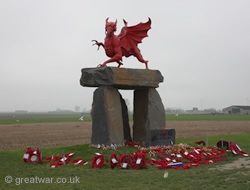
Welsh Memorial
50.902873
2.899693
A memorial unveiled in August 2014 dedicated to the memory of all those of Welsh descent who took part in the First World War.
Latitude 50.902873; Longitude 2.899693
-
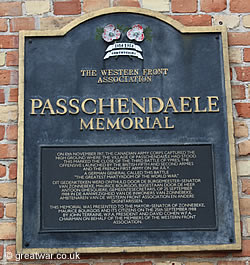
Western Front Association Memorial Plaque
50.900496
3.020096
Plaque to commemorate the capture of Passchendaele, as it was then called, by the Canadian Army Corps on 10 November 1917.
Latitude 50.900496; Longitude 3.020096
The plaque was unveiled at the Passendale town hall by The Western Front Association (WFA) on 25 September 1988 by the President the late John Terraine and Chairman the late David Cohen.
For information about The Western Front Association, its aim to perpetuate the memory of those who fought and died in the war of 1914-1918 see our information page and link to the Association at:
-
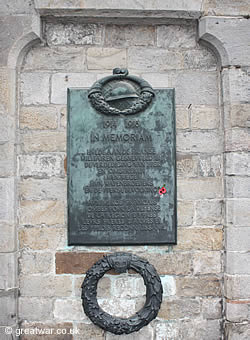
Ypres Memorial to Fallen French Heroes 1914-1918
50.851047
2.885625
The memorial commemorates members of the French military forces who fell in the defence of the region of Ypres. The memorial is dedicated from their brothers in arms and the people of Ypres.
Latitude 50.851047; Longitude 2.885625
The memorial is located on the south façade of the Cloth Hall to the right of the Donkerpoort gateway under the belfry.
-
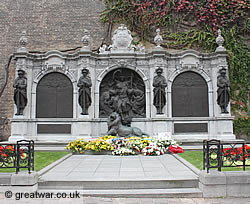
Ypres War Victims Monument
50.850786
2.884421
The memorial commemorates the military men and civilians from Ypres (Ieper) who died during the First World War.
The memorial is located in the centre of Ieper opposite the western end of the Cloth Hall.
Ypres War Victims Monument -
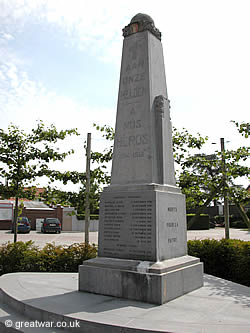
Zandvoorde Village Memorial
50.813000
2.980868
An example of a Belgian village war memorial dedicated to the men from the village who fought in the military and who did not return home.
The inscription is written in Flemish and French: “AAN ONZE HELDEN — A NOS HÉROS”
Latitude 50.813000; Longitude 2.980868
Related Topic
|
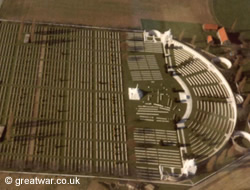
There are over 100 military cemeteries in the Ypres Salient where many thousands of Allied and German servicemen are buried. Visitors to the cemeteries will often find graves for which the remains of a casualty are unidentified. Although the casualty cannot be identified at his place of burial, there will likely be a place of commemoration on a special memorial in a cemetery or on one of the official memorials to the missing.